C-Section Recovery Tips: What to Expect and How to Heal After a Cesarean Birth
A cesarean birth is major abdominal surgery, and while it may be planned or unexpected, recovery deserves intentional care and support. Understanding what happens during C-section recovery can help you feel more prepared, reduce anxiety, and promote smoother healing in the weeks that follow.
Whether you are preparing for a scheduled cesarean or healing from an unplanned one, these C-section recovery tips will guide you through what to expect and how to care for your body after birth.
What Happens During a C-Section Recovery?
During a cesarean birth, an incision is made through the abdominal wall and uterus to deliver your baby. While many parents focus on the birth itself, the recovery period is just as important.
Initial healing begins in the hospital, typically over 2–4 days. Full recovery can take six to eight weeks, sometimes longer depending on your body and birth experience.
You may experience:
- Abdominal soreness and incision tenderness
- Fatigue
- Swelling or bruising around the incision
- Limited mobility
- Vaginal bleeding (lochia)
- Emotional ups and downs
Knowing these symptoms are common can help you approach recovery with realistic expectations.
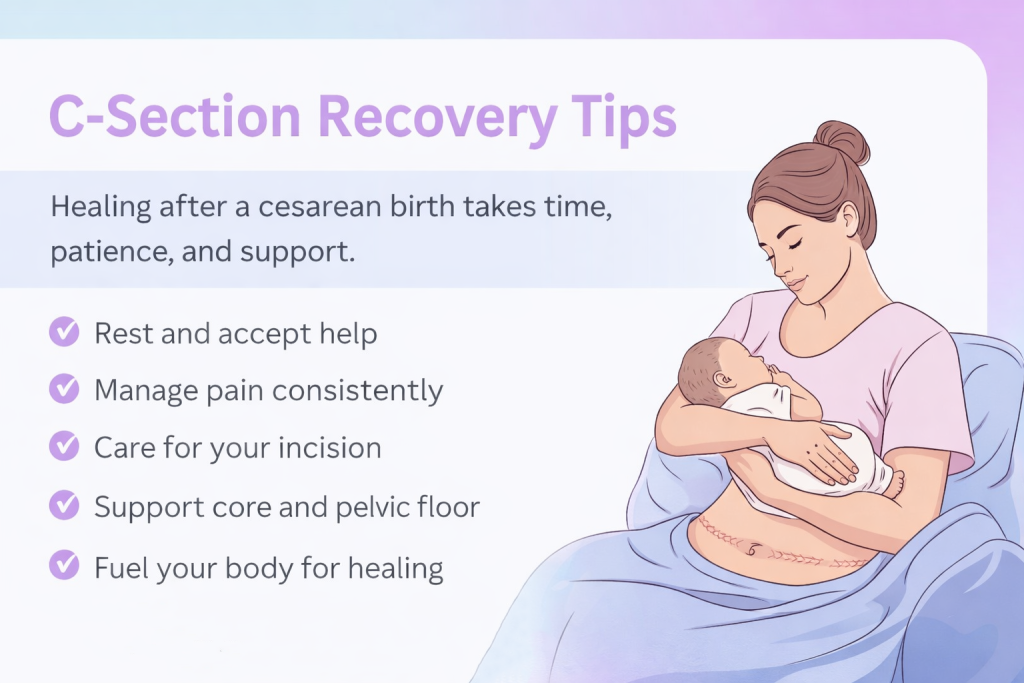
1. Prioritize Rest and Support
Rest is not optional after a cesarean birth. Your body is healing from surgery while also adjusting hormonally and caring for a newborn.
Accept help whenever possible. Ask your partner, family members, or friends to assist with:
- Household chores
- Meal preparation
- Older children
- Lifting heavier items
Avoid lifting anything heavier than your baby for the first few weeks unless cleared by your provider. Setting up a comfortable recovery space at home ahead of time can make a significant difference. You can find more preparation guidance in our article on building a postpartum recovery plan.
2. Manage Pain Safely and Consistently
Staying ahead of pain is essential for recovery. Take prescribed medications as directed and do not wait until discomfort becomes severe. Pain control helps you move more comfortably, which supports circulation and healing.
Gentle movement, such as short walks around your home, can reduce stiffness and lower the risk of blood clots. Avoid intense activity or core exercises until your provider approves them.
3. Care for Your Incision Properly
Keep your incision clean and dry. Follow your provider’s specific instructions regarding bathing and wound care.
Watch for signs of infection, including:
- Redness that spreads
- Warmth around the incision
- Pus or unusual discharge
- Fever
- Increasing pain
If you notice any of these symptoms, contact your provider immediately.
4. Support Your Core and Pelvic Floor Gently
Even though your baby was delivered surgically, your pelvic floor still experienced pregnancy-related changes. Gentle breathing exercises and proper posture can support healing without straining your abdominal muscles.
Before returning to exercise, consider working with a pelvic floor therapist. You can learn more about this in our guide to pelvic floor therapy and understanding the benefits.
5. Be Mindful of Emotional Recovery
C-section recovery is not just physical. Some parents may experience disappointment, relief, gratitude, or a mix of emotions. All responses are valid.
If you feel overwhelmed, anxious, or persistently low, speak with your provider. Emotional well-being is just as important as physical healing. Our blog on mental health in pregnancy and postpartum explores this further.
6. Fuel Your Body for Healing
Nutrition plays a powerful role in surgical recovery. Focus on:
- Protein-rich foods for tissue repair
- Iron-rich foods to replenish blood loss
- Fiber to prevent constipation
- Hydration to support circulation and milk production
Balanced meals can help your energy levels and support breastfeeding if you choose to nurse.
Final Thoughts on C-Section Recovery
Healing after a cesarean birth takes time, patience, and support. Rest when you can. Move gently. Ask for help. Monitor your body.
A C-section is a powerful birth experience. With proper care and preparation, recovery can feel manageable and empowering.
If you are preparing for birth and want to feel informed and confident about all delivery options, explore our prenatal classes designed to help families prepare physically and emotionally for labor, delivery, and postpartum recovery.